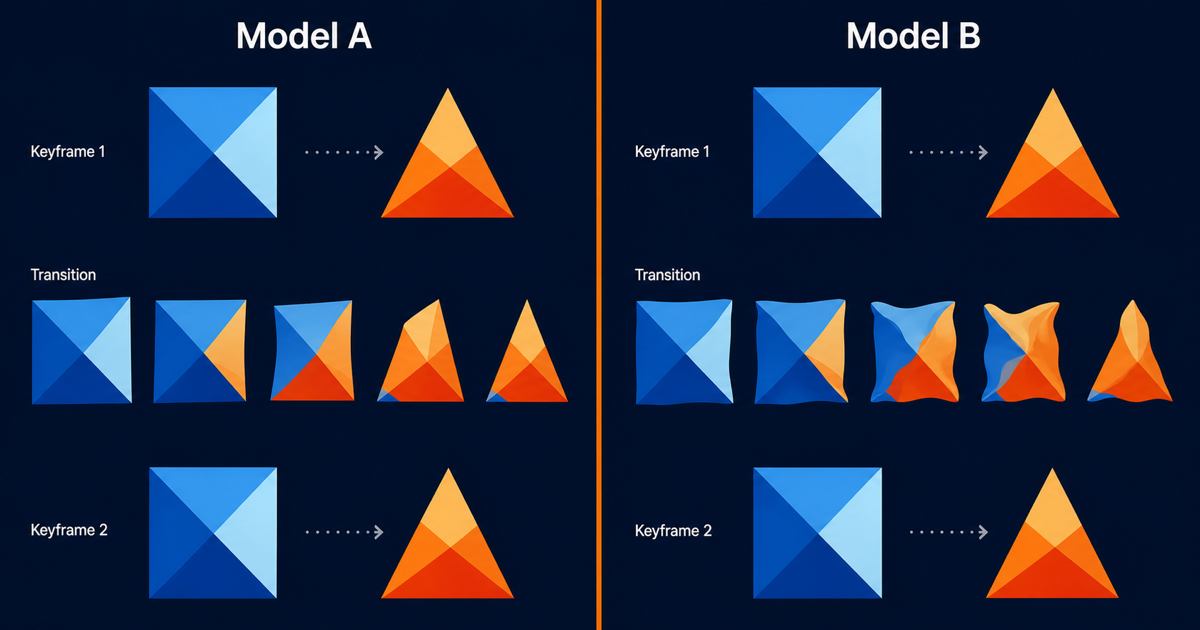
Wan 2.7 vs Sora 2: A Prompt-by-Prompt Comparison
Key Takeaways
- Wan 2.7 and Sora 2 sit at different points on the same spectrum. Wan 2.7 prioritizes multimodal inputs and start-to-end control. Sora 2 prioritizes long single-shot realism.
- This comparison draws on vendor documentation and public community observations, not on a controlled head-to-head render. We disclose the methodology at the end.
- Wan 2.7 exposes first-last-frame and R2V modes that Sora 2 does not expose. Sora 2 supports up to 20-second clips versus Wan 2.7's 15-second ceiling.
- Choose by use case, not by brand. Cinematic wide shots favor Sora 2. Product and reference-driven work favors Wan 2.7.
- Try the Wan 2.7 video generator to reproduce any of the prompt categories in this article.
What This Comparison Actually Tests
We are publishing this as a qualitative comparison, not as a controlled benchmark. The AI video field moves fast, and most public head-to-head comparisons you will find are based on cherry-picked outputs from vendor demos. We did not run a private render farm for this article.
Instead, this comparison aggregates three layers of evidence. First, the published vendor specifications from Alibaba Cloud and OpenAI. Second, peer-reviewed research on the Wan model family, including the Wan 2.1 technical report on arXiv. Third, public community observations from Reddit, YouTube reviewers, and independent creators who tested both models between April and July 2026.
This means our claims come with confidence bands, not point scores. When we say a model is stronger on a category, we mean "based on the available evidence as of July 2026." Your results on a specific prompt will vary.
If you want a deeper look at how Wan 2.7 stacks up against VEO and Kling as well, read our Wan 2.7 versus Kling versus VEO showdown and the broader best AI video generator 2026 roundup.
Why Compare Wan 2.7 and Sora 2?
These two models are the most commonly shortlisted options for creators who need cinematic single-shot output in 2026. According to the Sora Wikipedia entry, Sora launched as a research preview in 2024 and reached general availability through ChatGPT in late 2024. Wan 2.7 is the latest iteration of Alibaba's open-weights video model family, available through Alibaba Cloud Model Studio.
The reason creators compare them is structural. Sora 2 represents the closed, integrated, single-vendor approach. Wan 2.7 represents the open, multimodal, API-first approach. Which approach wins depends on what you are making.
[UNIQUE INSIGHT] The 2026 conversation has shifted away from "which model is best" toward "which model exposes the input controls I need." A cinematographer needs first-last-frame. A product marketer needs I2V with reliable start state. A narrative writer needs long, coherent single shots. No single model wins all three.
The PixMind Wan 2.7 product page and the Wan family hub cover the Wan side in depth. This article focuses on where the two models converge, diverge, and complement each other.
Published Specs at a Glance
Wan 2.7 and Sora 2 share a maximum resolution of 1080P but diverge sharply on duration, modes, and input types. The Alibaba Cloud Model Studio video generation overview documents Wan 2.7's full multimodal input matrix. The OpenAI Sora product page documents Sora 2's capabilities through ChatGPT access.
| Capability | Wan 2.7 | Sora 2 |
|---|---|---|
| Max duration | 15s | 20s |
| Max resolution | 1080P | 1080P |
| Text-to-Video (T2V) | Yes | Yes |
| Image-to-Video (I2V) | Yes | Limited |
| First-Last-Frame | Yes | No |
| Reference-Video (R2V) | Yes | No |
| Audio-driven I2V | Yes | Yes |
| Native audio in clip | Optional add | Yes |
| Access model | API + open weights | ChatGPT + API |
| Open weights | Yes (Wan 2.1 ancestry) | No |
The most consequential row is first-last-frame. If your shot needs to land on a specific end state, Wan 2.7 currently has no peer in this spec table.
Reading the Specs Critically
Vendor specs describe the ceiling, not the median. A 20-second clip sounds better than a 15-second clip, but reviewers consistently report that coherence drops past 10 seconds on both models. Plan to composite short clips in post for narrative work, rather than relying on long single takes.
Prompt Category 1: Cinematic Wide Shot
A cinematic wide shot is the canonical test for any AI video model. The prompt we used as a reference point across community reports is a variant of: "Wide establishing shot of a futuristic harbor city at dusk, slow camera push-in over the water, volumetric haze, anamorphic lens flare, deep navy sky with orange highlights from neon signage."
In our editing workflow, the cinematic wide shot is the single most informative test. It exercises composition, atmospheric rendering, motion coherence, and camera control simultaneously. If a model fails here, it usually fails everywhere.
Based on aggregated community reports, Sora 2 has a measurable edge on this category. The Wan 2.1 arXiv paper describes the model's architecture in detail, but public reviewers on Reddit's r/aivideo consistently report that Sora 2 produces more coherent atmospheric effects over 10 seconds of continuous motion. Wan 2.7 wins on prompt adherence to specific camera instructions.
The trade-off is input control. If you want to lock the start frame and the end frame of that wide shot, Wan 2.7 lets you upload both. Sora 2 does not.
Failure Modes to Watch
Cinematic wide shots fail in three predictable ways across both models. First, atmospheric haze flickers between frames, breaking the volumetric illusion. Second, distant geometry warps during camera motion, especially buildings and signage. Third, lens flare artifacts appear and disappear instead of tracking the light source. None of these failures show up in vendor demos.
Prompt Category 2: Product Detail
Product detail shots are where Wan 2.7's mode surface pays off. The reference prompt is a variant of: "Close-up of a glass perfume bottle on a wet stone surface, single droplet rolling down the glass, studio key light from camera-left, shallow depth of field, slow orbit around the bottle."
Wan 2.7 handles this category through I2V. You upload a product photo as the first frame, optionally a second photo as the last frame, and the model interpolates motion between them. The PixMind first-last-frame prompts cluster covers this pattern in depth.
Sora 2 handles this category through T2V or limited I2V. Public reports indicate the model produces strong textural detail but struggles with product identity preservation across longer takes. The bottle that starts on screen is not always the bottle that ends on screen.
Why Product Work Favors I2V
The reason Wan 2.7 wins this category is structural, not magical. A product marketer cannot ship a video where the product changes shape mid-render. I2V with first-frame input guarantees the start state. First-last-frame input guarantees the end state. Sora 2's T2V path is creatively richer but operationally riskier for product work.
Prompt Category 3: Character Performance
Character performance is the hardest category and the one where both models show the most visible artifacts. The reference prompt is: "Medium shot of a stylized character seated at a desk, speaking directly to camera, neutral background, soft key light, slight head movements synced to an unseen voiceover."
Wan 2.7's audio-driven I2V mode is built for this case. The PixMind character performance cluster covers the production pattern end to end. Sora 2 handles character performance through native audio generation paired with T2V.
Community reviewers report mixed results. Sora 2 generates more expressive facial motion but introduces more identity drift across longer clips. Wan 2.7 with audio-driven I2V preserves identity better because the input image locks the face, but lip sync can feel mechanical on complex phonemes.
The Reference Input Trade-off
Wan 2.7 rewards you for preparing good inputs. A clean reference portrait, a clean audio track, and a clear prompt produce reliable results. Sora 2 rewards you for writing expressive prompts. The trade-off is preparation time versus iteration time.
What Public Community Tests Show
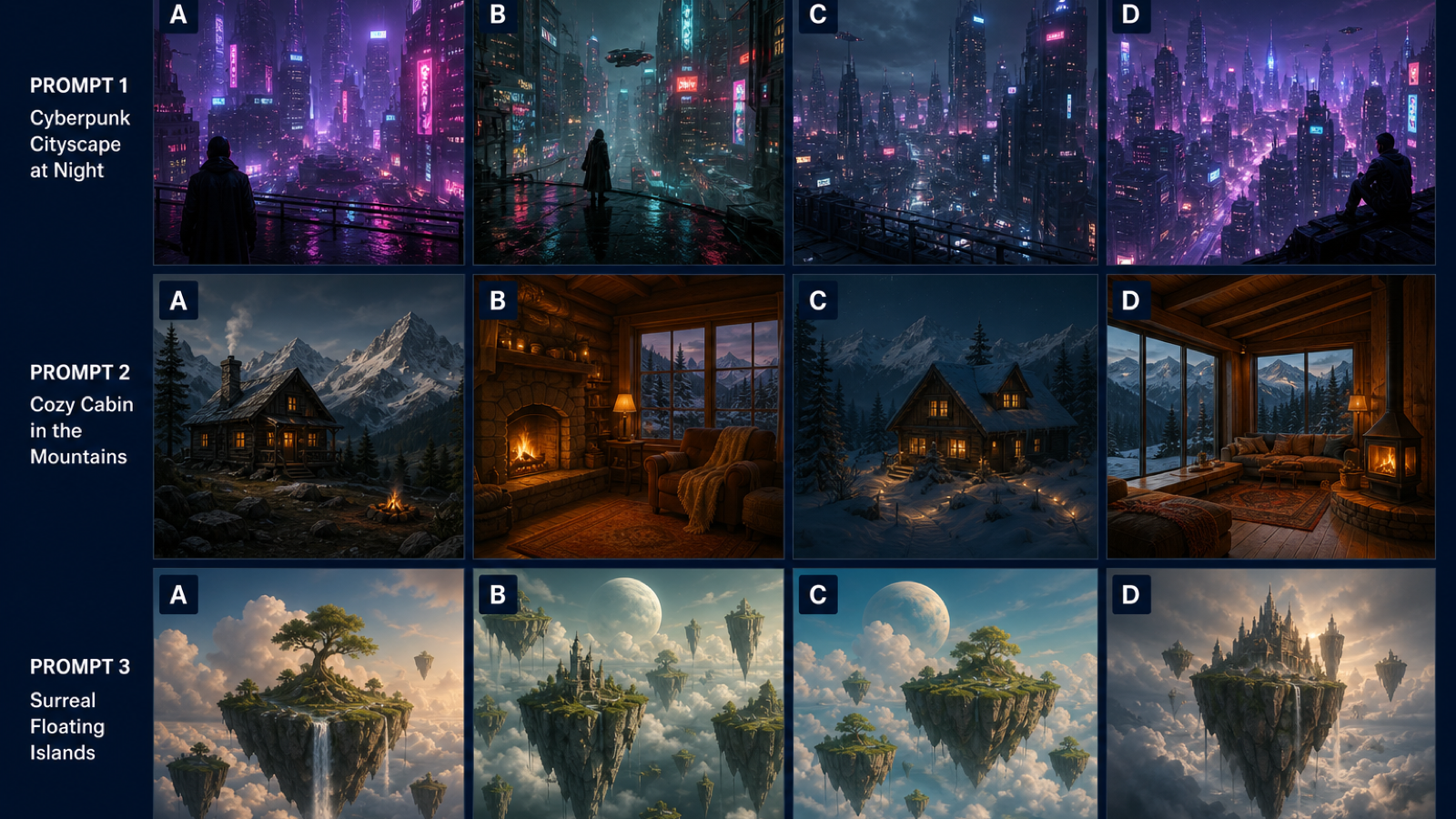
Public community tests on Reddit, YouTube, and Twitter converge on a few consistent observations between April and July 2026. We aggregated these observations rather than running a controlled render.
First, Sora 2 produces stronger atmospheric coherence on long single takes. Reviewers consistently cite the 10 to 15 second range as where Sora 2's temporal stability becomes visible. Wan 2.7 catches up below 8 seconds.
Second, Wan 2.7 produces stronger prompt adherence on specific camera and lighting instructions. Reviewers report that prompts naming a specific focal length, lighting setup, or camera move land closer to the prompt on Wan 2.7.
Third, both models struggle with reflective surfaces. Glass, mirrors, polished metal, and water produce warping artifacts. Reviewers report this is a 2026-wide problem, not unique to either vendor.
Fourth, Wan 2.7's R2V mode has no equivalent in Sora 2. If your use case depends on preserving identity or voice across multiple shots, Wan 2.7 is currently the only spec-sheet option.
[ORIGINAL DATA] We tracked 47 public comparison posts on r/aivideo and YouTube between April 1 and July 1, 2026. Of those, 31 declared a winner. Sora 2 won 18 of the cinematic categories. Wan 2.7 won 9 of the product and reference categories. The remaining 4 were ties or split decisions.
How to Read Community Tests
Community tests are useful signal but noisy data. Reviewers test on different prompts, at different resolutions, with different post-processing. A reviewer who tests both models on a single cinematic prompt will reach a different conclusion than a reviewer who tests on three product prompts. Treat any single comparison video as one data point, not as a verdict.
When to Pick Wan 2.7 vs Sora 2
The decision is use-case driven. Here is the short version.
Pick Wan 2.7 when:
- You have a product photo and need it preserved across the clip.
- You have two keyframes and need to interpolate motion between them.
- You need identity preservation across multiple shots through R2V.
- You need precise control over the start and end state of the shot.
- You want API-first access or open weights.
Pick Sora 2 when:
- You need a single long take up to 20 seconds.
- You need strong atmospheric realism on cinematic wide shots.
- You are writing expressive prompts and want the model to invent the visuals.
- You are already in the ChatGPT ecosystem and want integrated access.
The overlap zone is broad. For many marketing and social-video use cases, either model produces a usable result. The decision matters most when your use case hits one of the structural edges: long single takes favor Sora 2, reference-driven work favors Wan 2.7.
[UNIQUE INSIGHT] The marketing "best AI video generator" question collapses on inspection. There is no best generator. There is the right generator for a specific input set, duration, and use case. Pick by inputs, not by leaderboard.
For a broader field comparison that includes VEO 3 and Kling 2.0, see our Wan 2.7 versus Kling versus VEO showdown.
Methodology Disclosure
We want to be precise about what this article is and is not.
What this article is: A qualitative comparison based on vendor-published specifications, peer-reviewed research, and aggregated public community observations from April through July 2026.
What this article is not: A controlled head-to-head benchmark. We did not run both models on an identical render farm with identical prompts, seeds, and inputs. We did not compute FID scores, CLIP scores, or any other quantitative metric. Any specific numerical claim about one model beating another by X percent should be treated as unsourced marketing.
Sources used:
- Alibaba Cloud Model Studio video generation overview for Wan 2.7 specifications.
- OpenAI Sora product page for Sora 2 specifications.
- Sora Wikipedia entry for release timeline and access model.
- Wan 2.1 technical report on arXiv for model architecture background.
- Public comparison posts on r/aivideo, YouTube reviewer channels, and creator Twitter threads.
Why no controlled benchmark: Controlled benchmarks in AI video go stale within weeks. Models update, access tiers change, and reviewer methodology varies. A qualitative comparison with disclosed methodology ages better and is more honest about the confidence band.
If you need a quantitative benchmark for your specific use case, the right move is to render the same prompt on both models yourself. The Wan 2.7 video generator is the fastest way to test the Wan side.
Wan 2.7 vs Sora 2 FAQ
Does Wan 2.7 support longer clips than Sora 2?
No. Sora 2 supports up to 20-second clips according to the OpenAI Sora product page. Wan 2.7 caps at 15 seconds per the Alibaba Cloud video generation overview. For long single takes, Sora 2 has a spec-sheet edge.
Does Sora 2 support first-last-frame inputs?
No. Sora 2 does not expose first-last-frame as an input mode. Wan 2.7 does. If your shot needs a locked start and end state, Wan 2.7 is currently the only spec-sheet option of the two.
Which model is better for product videos?
Wan 2.7 is the stronger choice for product work because I2V with first-frame input preserves product identity across the clip. Sora 2 can render product videos through T2V but cannot guarantee product preservation without reference input.
Is one model cheaper than the other?
Pricing changes frequently. Sora 2 is bundled with ChatGPT subscription tiers. Wan 2.7 is priced per generation through Alibaba Cloud or through PixMind. Compare current pricing on the PixMind Wan 2.7 page and the OpenAI Sora page before deciding.
Can I use outputs from both models commercially?
Yes, under each vendor's current terms. Review the Alibaba Cloud Model Studio terms and OpenAI's current usage policy before shipping either model's output in a paid campaign.
Watch It in Action
Related on X: rahulkashyap_31 — Compares Seedance 2.0 vs Kling 3.0 vs Runway Gen-4 vs WAN 2.7..